Optimizing Business Operations for Long-Term Organizational Success
Modern organizations operate in an increasingly dynamic business environment where efficiency, adaptability, and operational resilience are essential for sustained success. As markets evolve and customer expectations continue to change, businesses must regularly evaluate their internal operations to ensure they remain effective, scalable, and aligned with strategic objectives.
Business operations are more than day-to-day activities. They represent the foundation upon which organizations deliver value, manage resources, support employees, and achieve measurable business outcomes. Organizations that continuously improve their operational capabilities are often better positioned to respond to market changes, reduce inefficiencies, and strengthen overall business performance.
Rather than relying on reactive decision-making, successful businesses adopt structured operational strategies that encourage continuous improvement, cross-functional collaboration, and long-term organizational development.
"Operational excellence is achieved through continuous improvement, disciplined execution, and the willingness to adapt business processes as organizations evolve."
MB Ekko Dreams
Building a More Agile and Resilient Organization
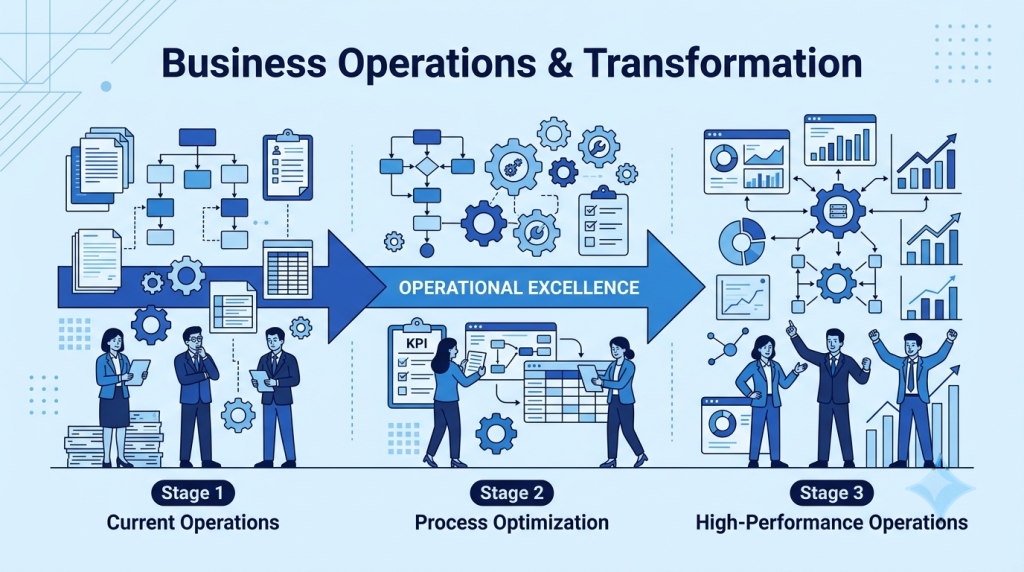
Business transformation should be approached as a structured journey rather than a one-time initiative. Organizations that successfully navigate transformation typically establish clear objectives, engage leadership throughout the process, and encourage collaboration across business functions.
Improving operations often involves reviewing existing workflows, eliminating unnecessary complexity, strengthening internal communication, and aligning business processes with strategic priorities. These improvements enable organizations to become more agile while maintaining operational consistency.
Effective transformation also encourages businesses to embrace innovation without disrupting the stability of their core operations. By introducing change through a planned and measured approach, organizations can improve performance while minimizing operational risks.
Common Areas for Operational Improvement
Many organizations identify opportunities for improvement in areas such as:
- Business process optimization and workflow efficiency
- Organizational structure and role clarity
- Resource allocation and operational planning
- Internal communication and collaboration
- Performance measurement and continuous strategic review.
- Performance measurement and reporting
- Risk awareness and operational resilience
- Process standardization across departments
- Continuous improvement initiatives
- Change readiness and organizational adaptability
Addressing these areas helps businesses establish stronger operational foundations that support future growth and organizational stability.